Skip to content
An open notebook and steaming mug on a sunny windowsill

Guides and tips

Water Heater Tips and Guides

Short, practical guides for Snellville area homeowners on caring for, troubleshooting and choosing a water heater.

Latest guides

Practical reading for your water heater

Each guide is written to answer one real question in a few minutes. Jump to any topic below.

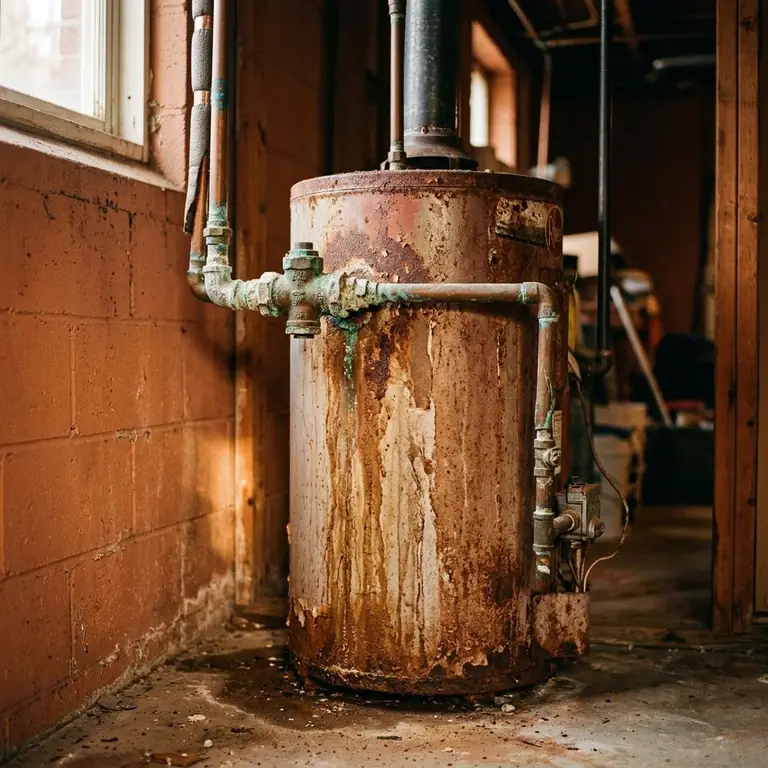
An aging water heater with visible rust stains near its base

How to find your water heater age from the label

Every tank heater has a rating label on its side. It lists capacity, fuel type and a serial number. Many manufacturers code the manufacture month and year into the first few characters of that serial number.

If you cannot decode it, take a clear photo of the whole label. That photo also answers most of the questions needed to plan a replacement: gallons, fuel, and input rating. Once a tank passes about ten years, it is worth planning ahead rather than waiting for a leak.

Planning an old water heater replacement
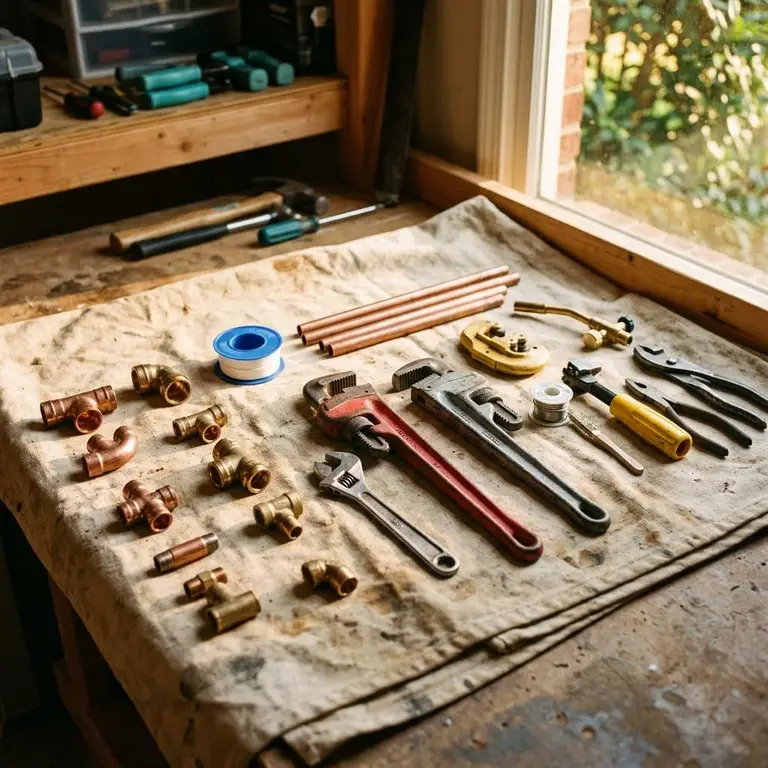
Plumbing tools and fittings set out on a canvas cloth

Flushing a tank: what it does and when to skip it

Sediment settles at the bottom of a tank and makes it noisy and less efficient. Draining a few gallons from the drain valve once a year can keep sediment from building up.

On a very old tank that has never been flushed, opening an old plastic drain valve can sometimes cause it to leak afterward. If your heater is past ten years and has never been drained, it can be wiser to plan the replacement instead.

Learn more about water heater repair
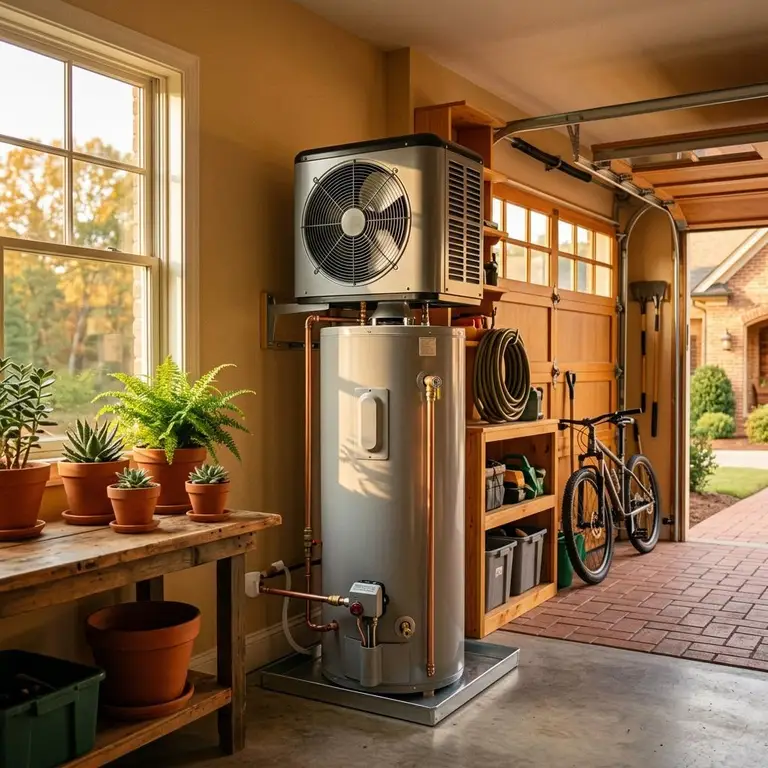
A heat pump hybrid water heater in a roomy garage

Tankless or hybrid: choosing an efficient upgrade

Tankless units heat water on demand and save space. They suit gas homes with an adequate gas line and families that run out of hot water. Hybrid heat pump heaters store hot water like a tank but use far less electricity by borrowing heat from the air.

A simple starting point: if you have gas and a tight space, look at tankless. If you have electric and a roomy garage, look at hybrid. Both are explained in detail on their service pages.

Read about hybrid water heater installation
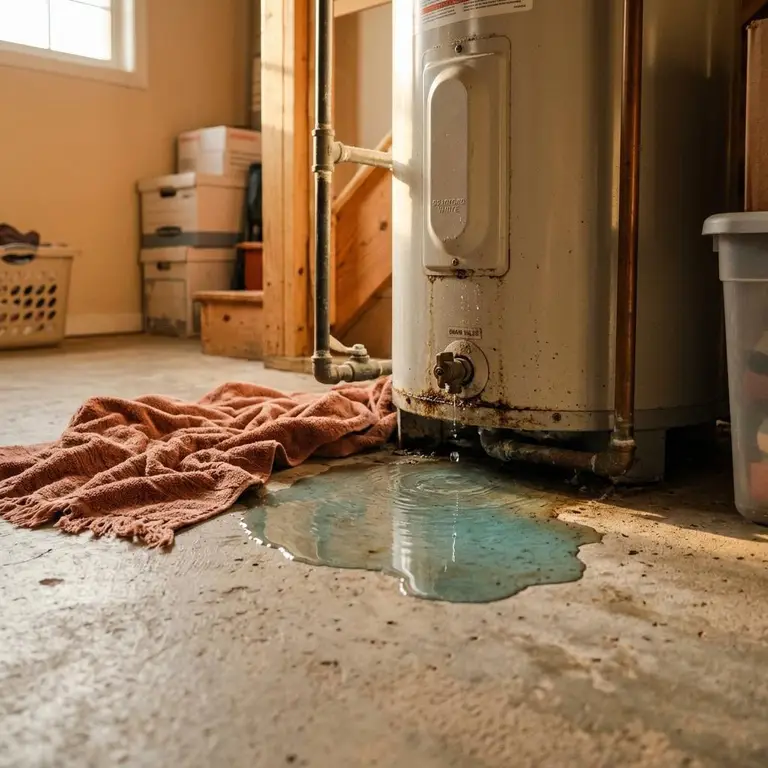
Water pooling on a concrete floor under a water heater

Found a leak? Five calm first steps

First, turn off power to an electric heater at the breaker, or set a gas heater to off. Second, close the cold water valve above the tank. Third, move anything nearby that could be damaged. Fourth, soak up standing water. Fifth, look at where the water starts: a fitting, a valve, or the tank itself.

That last observation decides most of what happens next. Fittings and valves can usually be repaired. A tank leaking from its body needs to be replaced.

What a leaking water heater replacement involves

Want to apply this to your home?

The contact page lists the details about your heater that make a first conversation useful.

See what to prepare